Mitochondrial dysfunction is a hallmark of aging and age-related disorders. In addition to the production of cellular energy currency (ATP), mitochondria are a major signaling hub that orchestrates multiple cellular processes essential to cellular health.
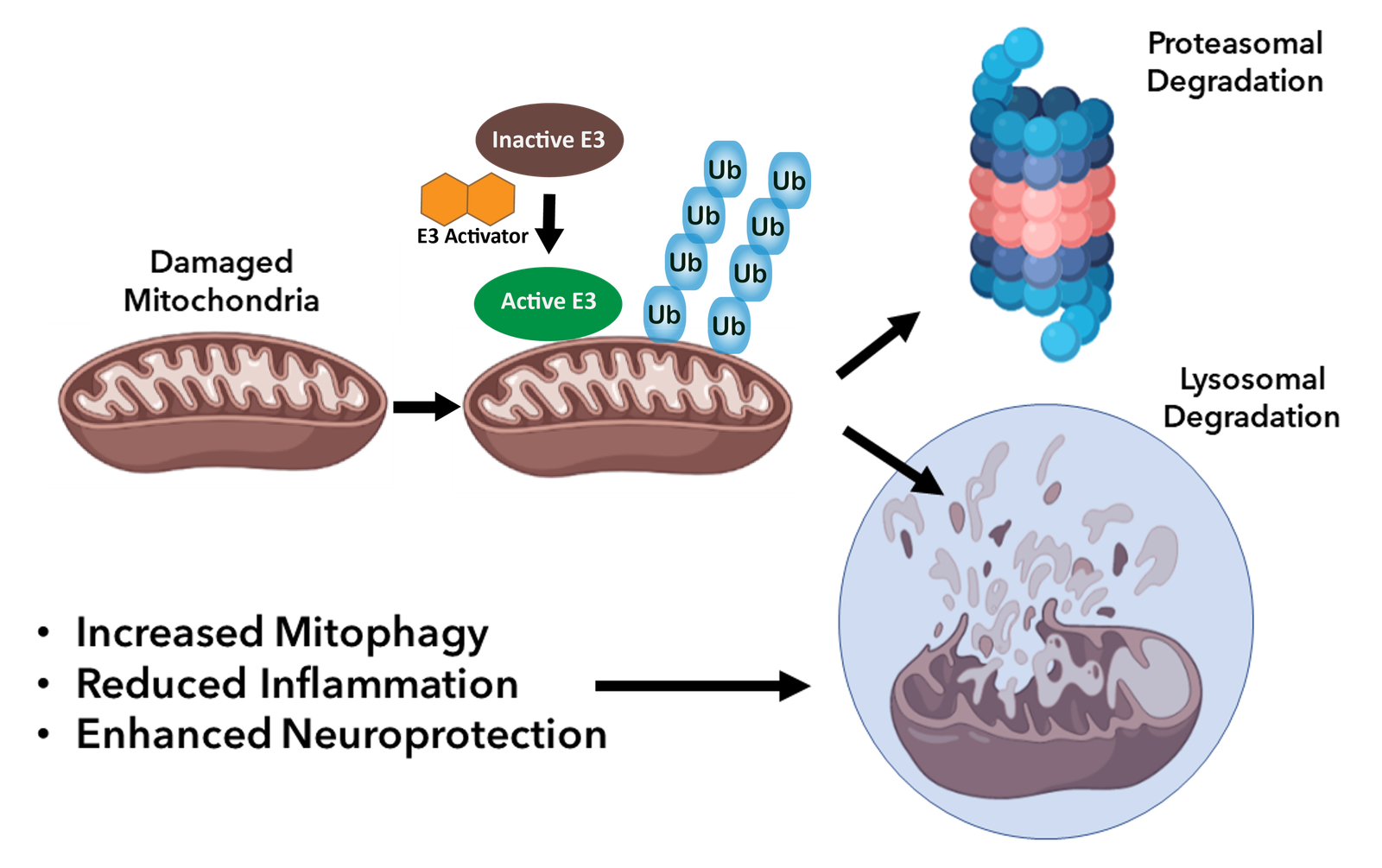
Any damage to mitochondrial integrity is sensed by the cell wherein the damaged mitochondria are degraded by lysosomes in a process called mitophagy.
This process is tightly controlled by E3 ligases and deubiquitinases of the ubiquitin proteasome system. Compounds that induce mitophagy can improve mitochondrial health and promote healthy aging.
Molecular Pathway
The Mitophagy Quality Control Mechanism
E3 activator mediated ubiquitination triggering proteasomal and lysosomal clearance.
Increased Mitophagy
Accelerated clearance of depolarized and oxidatively damaged mitochondria via lysosomal engulfment.
Reduced Inflammation
Suppression of damage-associated molecular patterns (DAMPs) that trigger systemic sterile inflammation.
Enhanced Neuroprotection
Preservation of high-metabolic neuronal networks and dopaminergic integrity across aging pathways.
Mitochondrial homoeostasis is maintained through the synthesis of new healthy mitochondria by mitobiogenesis and is regulated by transcription factors as well as E3 ligases of the ubiquitin proteasome system.
Degradation of mitochondria transcriptional repressors by E3 ubiquitin ligases leads to enhanced mitobiogenesis. Compounds that induce mitobiogenesis can improve mitochondrial health and promote healthy aging.
Partner on Mitophagy & Biogenesis Modulators
Connect with our scientific leadership in Malvern, PA to collaborate on assay platforms and compounds.