Mitochondria are the energy factories of the cell, and the focus of Mytohealth. These organelles extract nutrients from cells and convert them into ATP, energy currency used by every cell and tissue in the body.
Mitochondria are factories of energy that generate ATP and sustain life. Less is known about their role as a signaling apparatus that promote health and induce cell death when necessary.
Due to high metabolic demand, neurons and especially dopaminergic regions of the brain are especially susceptible to mitochondrial damage. Maintaining mitochondrial homoeostasis is central to cellular survival.
Maternal Mitochondrial Inheritance
While the Y chromosome is passed on from father to son, a mother’s Mitochondria is inherited by both sexes. This unique genetic inheritance plays a profound role in metabolic lineage and disease vulnerability.
Systemic Impact
Pathologies of Mitochondrial Dysfunction
Any dysfunction in mitochondria can lead to long term neurodegenerative disease and systemic decline.
Disruption in mitochondrial energy output is a root driver of Alzheimer’s disease and Parkinson’s disease, impairing synaptic signaling and neuronal survival.
Mitochondrial defects compromise cardiometabolic systems, vascular recovery from ischemic stress, and cellular regulation linked to cancer.
Molecular Pathology
Cellular Hazards & Quality Control
While mitochondria are prone to damage through mutations, ischemia, environment, oxidative stress, and other hazards, they are quickly repaired by a process called “mitophagy”.
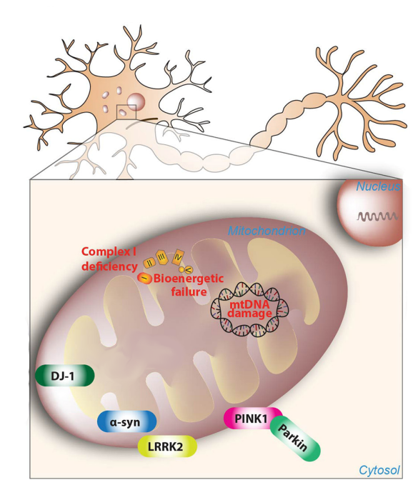
Damage to mitochondria leads to loss of energy, accumulation of misfolded proteins and aggregates that in turn de-polarize mitochondria, causing further loss of ATP and ultimately cell death.
The UPS is responsible for the removal of damaged mitochondria (mitophagy) and also plays a fundamental role in development of new mitochondria, or “mitobiogenesis”.
Figure: Neuronal mitochondrial cascade — Complex I deficiency, bioenergetic failure, and quality control regulators (Parkin, PINK1, α-syn).
Target Mitochondrial Dynamics in Your Research
Connect with our scientific team in Malvern, PA to explore research tools, assays, or collaborative programs.